ABOUT
ABOUT

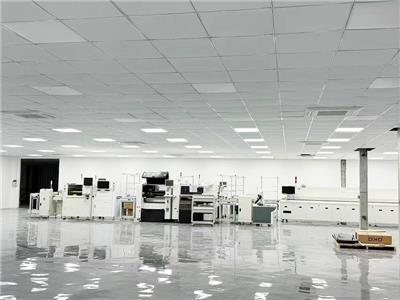
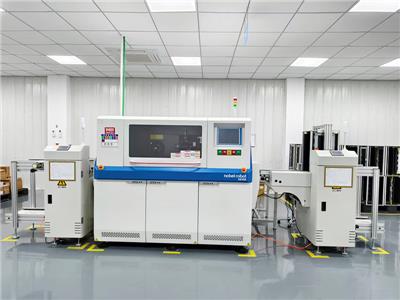
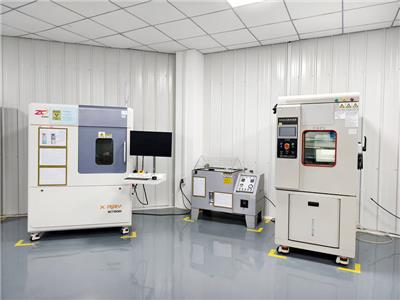
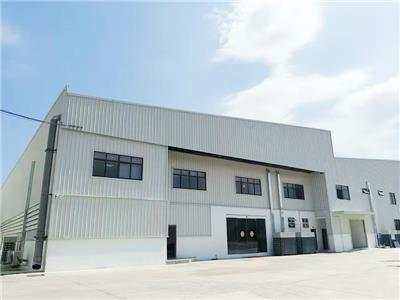
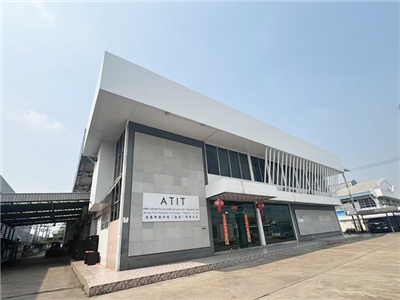
Access Thai, or in Chinese Tongtai, Intelligent Technology (Thailand) Co., Ltd was established in 2017 and currently has three factories located in Hefei, China, Pathumthani and Rayong, Thailand. It is a high-tech enterprise that produces smart home appliance controllers, equipment, and instruments, focusing on the research, development, and application of PCBA technology, integrating R&D, production, and sales.


  • 9 Year

    Development history

  • 3800 square meters

    Rayong new factory factory area

  • 700 Thousands of sets

    annual production capacity

  • 22 strip

    production line

RECOMMEND
Recommended products
SERVICE
Technology and services
ENVIRONMENT
production environment
NEWS
News
2026-03-04
Reasons why PCBA needs to be preheated before processing
In the mass production PCBA processing and welding environment, the temperature profile is very important. Slow heating and preheating stages can help activate flux, prevent thermal shock, and improve soldering quality during SMT placement. However, when reworking, prototyping, or the first PCBA prototyping project, it’s easy to forget the importance of the warm-up phase, which can result in the device being compromised even if it’s not damaged. Therefore, for such an important step, why is it often forgotten in the actual operation of SMT processing plants? What are the consequences of ignoring this step? 1. What is PCBA preheating before welding? When technicians and practitioners hear the word "temperature profile", they think of SMT reflow soldering. Along the large welding area, it is easy to see the 4 main temperature control zones that ultimately create the perfect welding joint. At each stage, technicians will rely on their own experience, repeated trials, strict control and improvement. Each stage can improve the quality of solder joints and reduce defects. However, other industrial soldering equipment may not have such precise temperature control, but what they have in common is a preheating stage. II. Flux combustion in selective wave soldering The role of the preheating stage is to steadily increase the temperature of the entire component from room temperature to a holding temperature lower than the melting point of the solder paste, which is about 150°C. Adjust the temperature change so that the slope remains at a few degrees per second. The period after the preheating stage is the soaking period, where the temperature is maintained for a period of time to ensure that the plate is heated evenly. Then enter the reflow stage and start solder joint formation. During the preheating and soaking process, the volatile solvents in the solder paste are burned off and the flux is activated. In production practice, it has been proved that preheating before welding is very important.
2026-03-02
What should you pay attention to when processing and producing SMT patches?
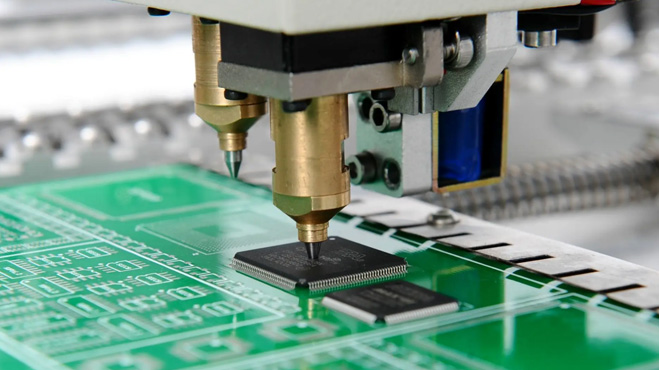
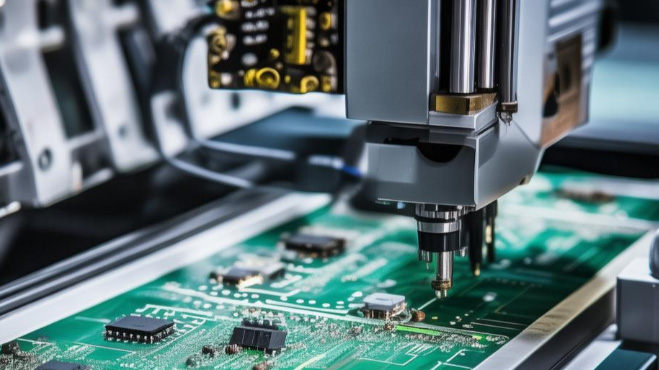
SMT chip processing and production processes must have strict standardized procedures to avoid errors during high-frequency line replacement and material replacement. In addition, during the processing process, the placement machine equipment must be checked regularly. 1. The process of producing SMT patches 1. Take out the feeder from the SMT placement machine and take out the used paper tray. 2.SMT operators can take materials from the material rack at the corresponding station according to their own station. 3. The operator uses the work number sheet to check the removed materials to confirm whether the specifications and models are the same. 4. The operator checks the new pallet and the old pallet, and checks whether the specifications and models of the two pallets are exactly the same. 5. Operators checking their materials can tell whether the company is consistent with the pallet. 6. If there is any abnormality, the SMT patch operator should immediately notify the delay processing. 7. Take samples from the new pallet, and then park the material on the old and new pallets. 8. Take the newly installed feeder material and paste it on the refueling process record form, and fill in relevant data such as refueling working time, operator management, etc. 9. Install the feeder back into the placement machine according to the SMT placement machine station; you need to fill in your supplementary information record effectively. 10. The operator should notify the engineering quality management personnel to conduct material matching and testing, and carry out material changes and inspections. 11.IPQC checks whether the data information is developed correctly and whether the site is correct according to the site number table. 12. Before starting production, the operation inspection of the above-mentioned placement machine has been completed. 2. Precautions for SMT chip processing 1. When processing SMT patches, everyone knows that solder paste is basically used. For newly purchased solder paste, if the SMT factory does not use it immediately, it needs to be stored in an environment of 5-10 degrees to avoid affecting the use of the solder paste. Do not place in sub-zero environment. It is not allowed if it is higher than 10 degrees. 2. During the placement process, the placement machine equipment must be checked regularly. If the SMT factory equipment is aging or some parts are damaged, in order to ensure that the patch does not bend and cause high material throw, the equipment needs to be repaired or replaced in time. Only in this way can production costs be reduced and production efficiency improved. 3. When performing SMT patch processing, if you want to ensure the quality of SMT patch processing and welding, you need to pay attention to whether the technical parameters of the reflow soldering process are reasonably set at any time. If there is a problem with the parameter settings, the quality of SMT patch welding cannot be guaranteed. Therefore, generally speaking, the furnace temperature needs to be adjusted twice a day. The above are all the things that should be paid attention to when processing and producing SMT patches. If you have any questions or suggestions, please contact us.
2026-02-24
What are the production links of PCBA processing?
PCBA is PCB circuit board art, such as PCB circuit board manufacturing, component procurement and inspection, SMT patch processing, plug-in processing, program burning, testing, aging, etc. The PCBA processing process involves many links. In order to produce good products, we must control the quality of each link. After receiving the PCBA order, analyze the Gerber file, pay attention to the relationship between the PCB hole spacing and the board's load-bearing capacity, do not bend or break, and whether high-frequency signal interference, impedance and other key factors are considered in the wiring. 2. Component procurement and inspection. Parts procurement requires strict control of channels, and goods must be picked up from large traders and original manufacturers to avoid 100% second-hand materials and fake materials. In addition, special incoming material inspection positions have been set up to strictly inspect the following items to ensure that parts are fault-free.  PCB: Reflow oven temperature test. Flying lines are prohibited. Whether the via holes are blocked or leaking ink; whether the board surface is bent; IC: Check whether the silk screen printing is completely consistent with the BOM, and store it at constant temperature and humidity; Other common materials: Check silk screen, appearance, power measurement, etc. The inspection items are carried out by sampling, and the proportion is generally 1-3%. 3.SMT chip processing. Solder paste printing and reflow oven temperature control are key points. It is very important that the laser stencil is of good quality and meets process requirements. According to the requirements of the PCB, some stencils need to be added or reduced, or U holes need to be used, and the stencils are made according to the process requirements. Gentle speed control of the reflow oven is crucial for solder paste penetration and soldering reliability and can be controlled according to normal SOP operating guidelines. In addition, AI testing needs to be rigorously implemented to reduce the adverse effects of human factors.
2026-02-28
Things to note when processing PCBA boards
When we perform PCBA processing, the size of some PCB boards is relatively small. In order to improve production efficiency, we need to make splicing boards. After the PCBA processing is completed, the PCBA panels need to be divided into panels. Therefore, during the deboarding process, some precautions should be taken to prevent damage to the intact PCBA board. When manually dividing the board, be careful to hold the lower edge of the PCBA board with both hands to avoid bending deformation and damage to the PCBA electrical circuits, components, and tin channels. Machine depaneling requirements: 1. Stable support point. Without support, stress may damage the substrate and solder joints. Twist board. Or stresses generated during the depaneling process may cause hidden or obvious defects. 2. Wear protective gear. Be sure to make protective preparations before operation, and install high-frequency eye protection lighting devices to protect the safety of operators. It is best to bring a pair of eyes to protect your eyes. 3. Frequently wipe the machine spindle and cutting tools with alcohol to remove PCB dust generated during the depaneling process and maintain the normal operation of the depaneling machine. 4. After using it for a certain number of times, refuel the sliding rods and bearings of the splitter and check whether the screws are loose. 5. During the use of the machine, the workbench should be kept clean. It is best not to put anything else in it to avoid damaging the knife and items. Although there is an electric eye for maintenance, you should pay attention to a certain safety distance between your fingers and the knife during use. Generally speaking, when PCBA is divided into boards, the efficiency of machine dividing is higher than that of manual dividing. Low damage rate. However, when the machine is depaneling, the process should be strictly followed to reduce human errors.
COOPERATE
Cooperating customers